
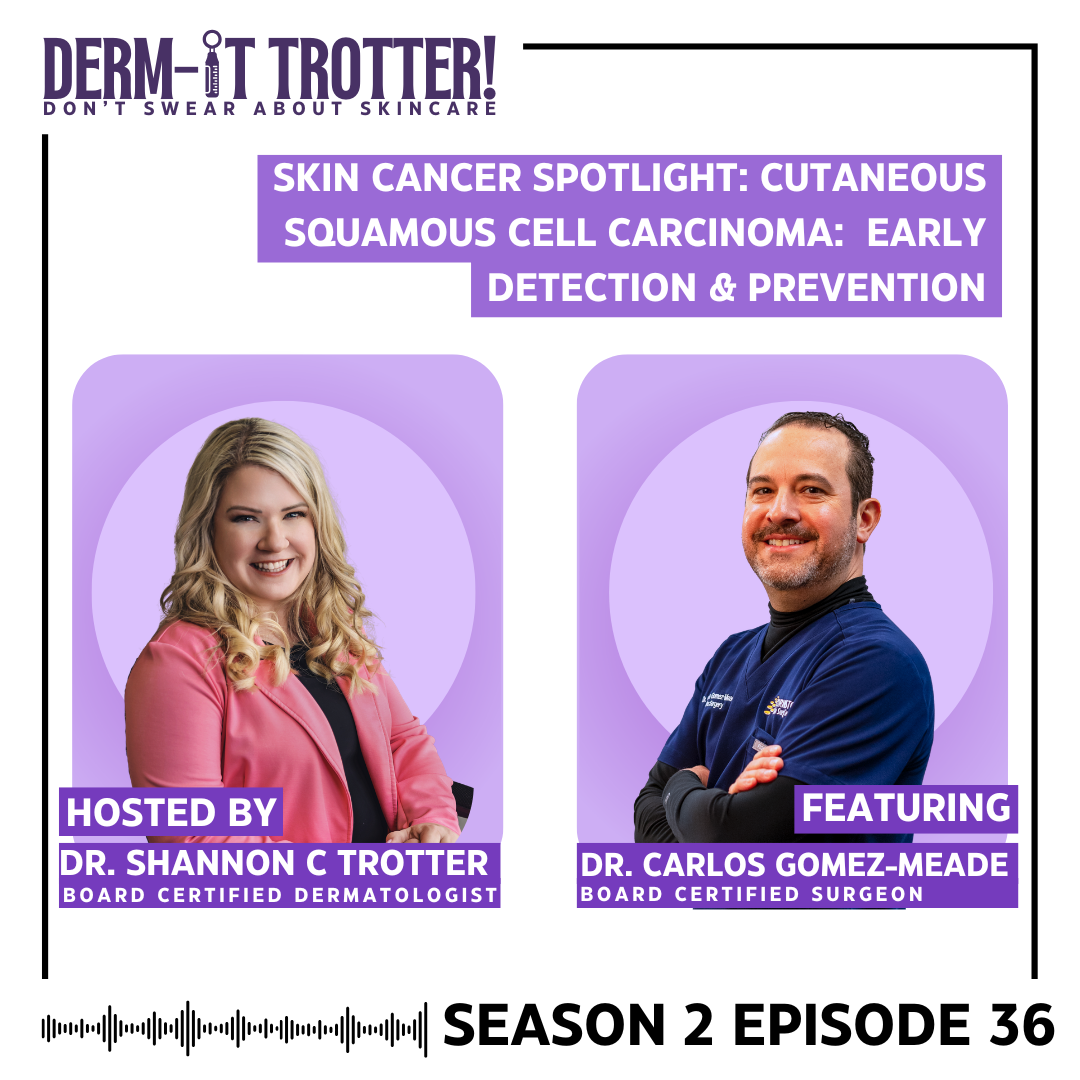
Cutaneous squamous cell carcinoma is the skin cancer many people dismiss until it starts behaving unpredictably. In this episode, Dr. Shannon C. Trotter sits down with board-certified dermatologist and Mohs surgeon Dr. Carlos Gomez Mead at the AOCD meeting in Orlando to explore why certain SCCs can become far more aggressive than their reputation suggests and why, on a population level, cutaneous squamous cell carcinoma may contribute to more deaths than melanoma.
Together, they unpack what actually makes a squamous cell carcinoma “high risk” in real clinical practice. The conversation covers warning signs like rapid growth, pain or tenderness that may signal perineural invasion, and high-risk head and neck locations where lymphatic spread becomes a major concern. They also discuss why commonly used staging systems, including NCCN, AJCC, and BWH classifications, do not always capture how unpredictable some skin cancers can be, and why experienced clinical judgment still plays a critical role in patient care.
The episode also takes a closer look at personalized medicine and the growing role of gene expression profiling in SCC management. Dr. Gomez Mead explains DecisionDx-SCC, a 40-gene test performed on original biopsy tissue, and breaks down what low-, medium-, and high-risk results can mean for real-world treatment planning. From increased imaging surveillance and multidisciplinary oncology collaboration to when adjuvant radiation therapy may improve outcomes, the discussion highlights how risk stratification is reshaping modern skin cancer care.
Special attention is also given to immunosuppressed patients, particularly transplant recipients, who face significantly higher risks for aggressive SCC. Dr. Gomez Mead shares why proactive planning, earlier intervention, and close monitoring can be lifesaving for these vulnerable populations.
Whether you are interested in dermatology, oncology, skin cancer prevention, Mohs surgery, or evidence-based approaches to early detection, this episode offers an in-depth look at the science, clinical decision-making, and evolving technologies shaping the future of cutaneous squamous cell carcinoma treatment.