I just love the Oscars…the glitz and glamour, incredible gowns and drama. Maybe one day I can be a seat filler and check another item off the bucket list. Remember back in 2022 when the slap heard around the world became the focus of Hollywood’s most famous movie awards show? If you don’t, just Google “the slap heard around the world,” and it should take you to a nice video clip capturing the moment. While it was a big day for Will Smith and Chris Rock, it was also a turning point for dermatology. Suddenly the word alopecia caught fire and with it, attention on a diagnosis that you might have never heard of before—alopecia areata.
So why the slap? Well, Chris Rock made a joke about Will Smith’s wife, Jada Pinkett-Smith’s shaved head. When she was diagnosed with alopecia areata, she was very open about her diagnosis and bravely decided to shave her entire scalp. And while I don’t agree with Will Smith’s choice of how to react, I can appreciate how he was trying to convey the seriousness of alopecia areata. Too many people including insurance companies, and yes, sometimes even health care providers, think of hair loss as a cosmetic or insignificant concern. Well, it’s not. Alopecia areata (AA) is a medical diagnosis and deserves to be treated with respect as do the patients who suffer with it.
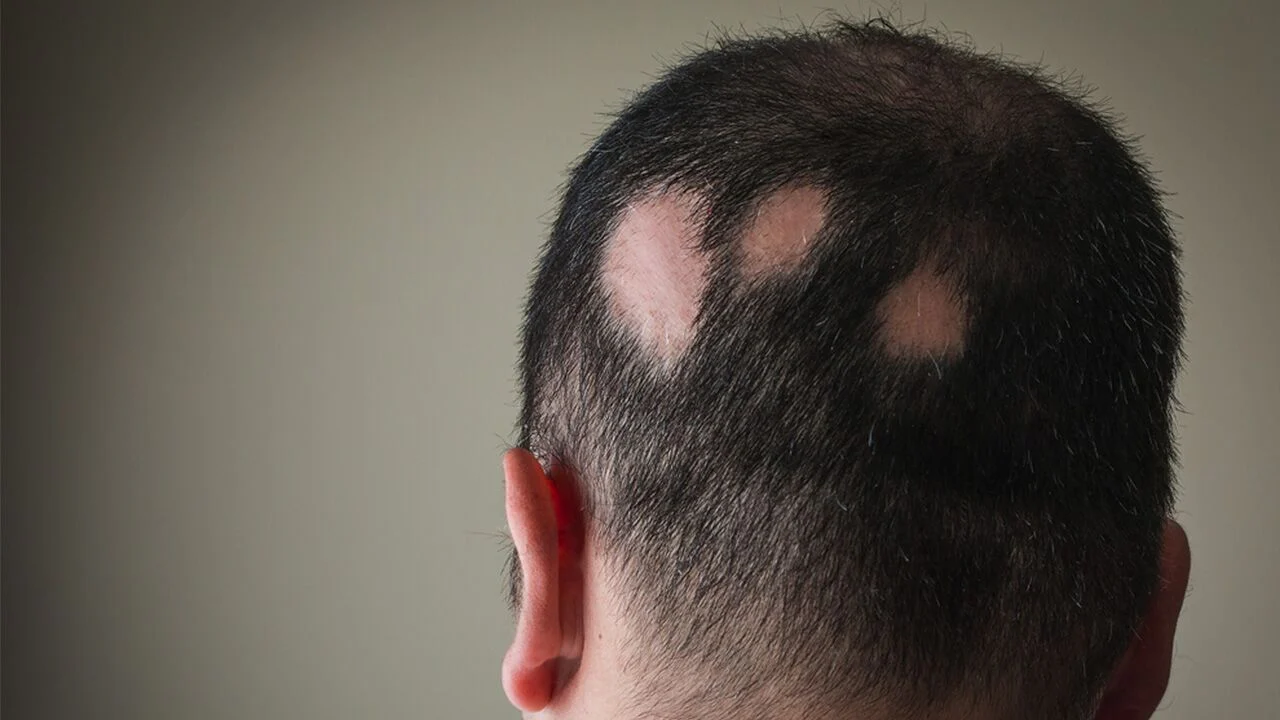
AA is a condition where the immune system gets confused and mistakenly targets the hair follicle, which leads to hair loss. Often AA presents as rounded patches but it can be more diffuse and can involve other areas of the body besides the scalp, including the eyebrows, eyelashes and body hair. You can even have nail changes like pits, rough or sandpaper texture, and/or brittleness. Alopecia areata doesn’t follow a script—it is unpredictable and the journey is unique to each patient. Some have limited involvement while others have the entire body hair affected. And we also know that those who seem to have very little involvement can go on to progress. Like many other skin conditions, AA is chronic in nature and we don’t cure it, but boy, have we come a long way with treating it.
When I first started practice, prednisone and methotrexate (yes, it’s ok to cringe a little) were my go-to systemic agents often partnered with steroid injections into the affected area. Topical steroids, calcineurin inhibitors and vitamin D analogs were a part of our tool kit, but not very effective. Contact sensitization, a treatment I still use today, was also an option. It’s a concept where we try to trick the immune system back to normal by creating another rash, called a contact dermatitis, at alopecia areata sites. The thought process behind it is pretty cool—confuse the immune system back to normal by causing a rash so it stops attacking the hair follicles and allows hair to grow.. More recently, we have a new class of drugs called Jak inhibitors, which have been a real game changer. Although not perfect, they have offered us more success at regrowing hair than some of our more traditional therapies and in my opinion, with better safety and long-term use potential.
But alopecia areata doesn’t stop just at the hair and nails. It’s also associated with other underlying autoimmune conditions like atopic dermatitis, thyroid disease, Type I diabetes, and vitiligo. Notice the trend? Yes, other autoimmune diseases. It’s not unusual for someone who is prone to autoimmune disease to have more than one or report a family history of autoimmune disorders. In addition, AA patients report higher rates of depression and anxiety. Hair carries identity, culture confidence and self-expression. So yes, the visible effects matter. AA affects a patient’s quality of life in ways we often don’t think of. For example, my patient with AA cried after she was able to get a haircut for the first time in 6 years. I also had a pediatric patient tell me that after he regrew his hair, the bullying stopped and he was no longer afraid to go to school. Stories like these remind all of us of the emotional toll AA takes on patients and how we need to prioritize it as a medical diagnosis.
Trotter’s Take: Alopecia areata is an autoimmune medical condition with a variable course and associated underlying conditions and the advent of Jak inhibitors has been a huge win for treatment.
Want to learn more about what triggered that slap at the Oscars? Then you’ve got to listen to my podcast with Dr. Erik Domingues as we give an award-winning podcast on alopecia areata.