Hidradenitis Suppurativa: Deroofing, Surgery and More
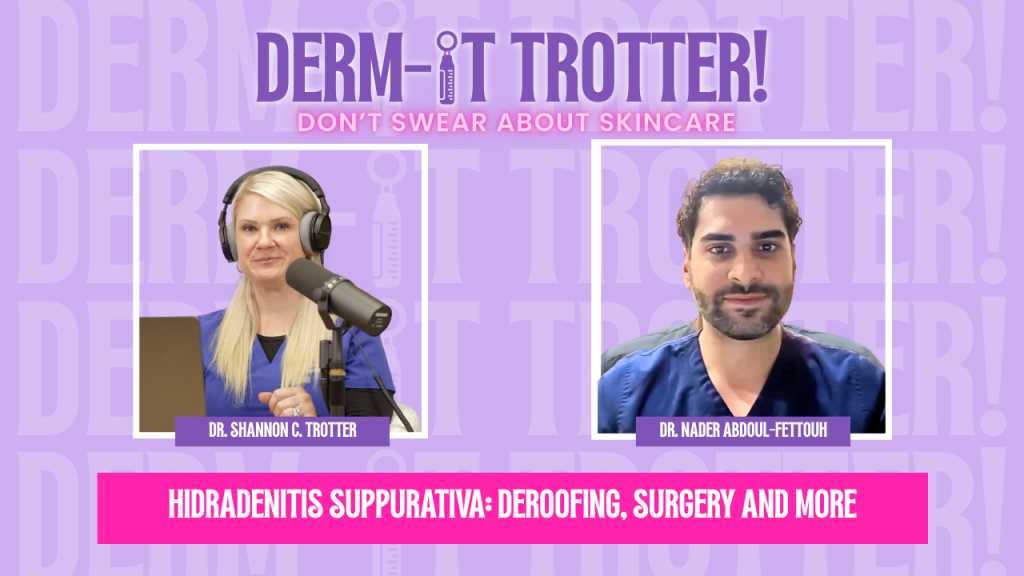
A painful lump in your armpit is bad enough. Now imagine it keeps coming back, forming tunnels under the skin, draining on your schedule instead of yours, and forcing you to plan your day around bandages and friction. That’s the reality for many people living with hidradenitis suppurativa (HS), and it’s why we wanted a clear, practical conversation about procedures that can actually help.
We’re joined by Dr. Nader Aboul-Fettouh, a board-certified dermatologist and Mohs surgeon, to break down what HS is at the follicle level and why chronic inflammation leads to nodules, abscesses, scarring, and sinus tracts. Then we get specific about HS procedures and where they fit alongside modern medical therapy like biologics. We talk through intralesional Kenalog injections for fast flare relief, why standard incision and drainage tends to recur, and why deroofing can be such a high-satisfaction option when the same spot keeps flaring.
From there, we zoom out to the bigger toolbox: excision for long-standing scar “balls” that no medication can penetrate, plus niche and emerging options like cryoinsufflation, laser hair removal, CO2 laser ablation, photodynamic therapy, IPL, and even Botox for sweat and friction. We also cover real-world constraints that patients and clinicians face, including healing expectations, skin type considerations, and insurance coverage.
If you’re trying to build a smarter HS treatment plan or you care for patients with HS and want procedural options you can confidently discuss, listen now. Subscribe, share this with someone who needs it, and leave a review with your biggest HS question.
DISCLAIMER: The views and opinions expressed in the Derm-it Trotter! podcast are those of the host and guests and do not necessarily reflect the views or positions of the guests’ or host’s institution or employers. The Derm-it Trotter! Podcast is for general informational purposes only and does not constitute the practice of medicine, nursing or other professional health care services, including the giving of medical advice, and no doctor/patient relationship is formed. The use of information on this podcast or materials linked from this podcast is at the user’s own risk. The content of this podcast is not intended to be a substitute for professional medical advice, diagnosis, or treatment. Users should not disregard or delay in obtaining medical advice for any medical condition they may have and should seek the assistance of their health care professionals for any such conditions.
IL-17 Inhibitors: What Makes Each One Different?
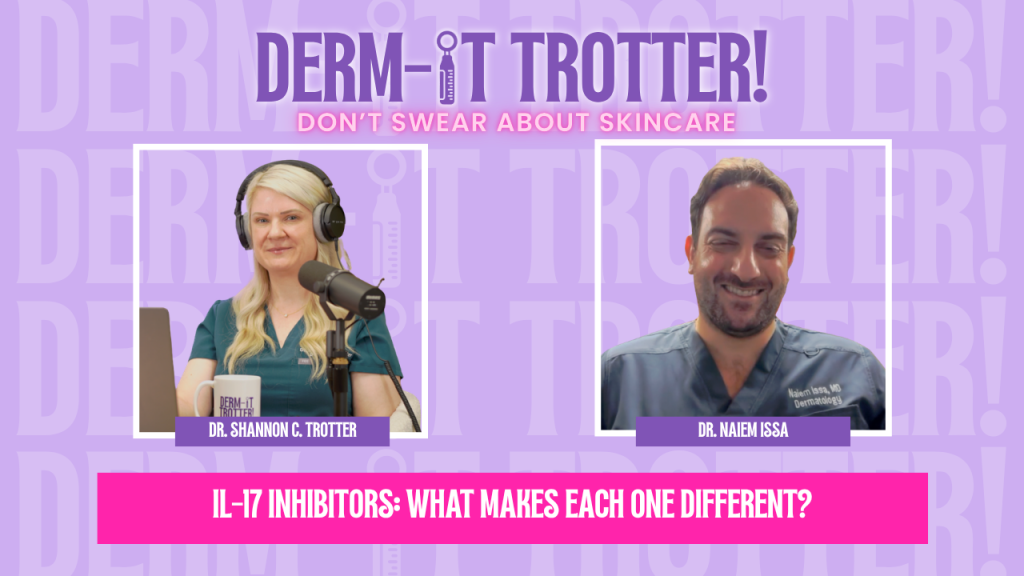
Psoriasis can look like “just plaques,” but the biology underneath is a lot bigger and a lot more hopeful than most people realize. We sit down with Dr. Naiem Issa, a board-certified dermatologist and dermatologic surgeon involved in dermatology research and drug development, to unpack what psoriasis really is: a genetically primed inflammatory disease that […]
Acne Debunked: A Dermatologist Tells All
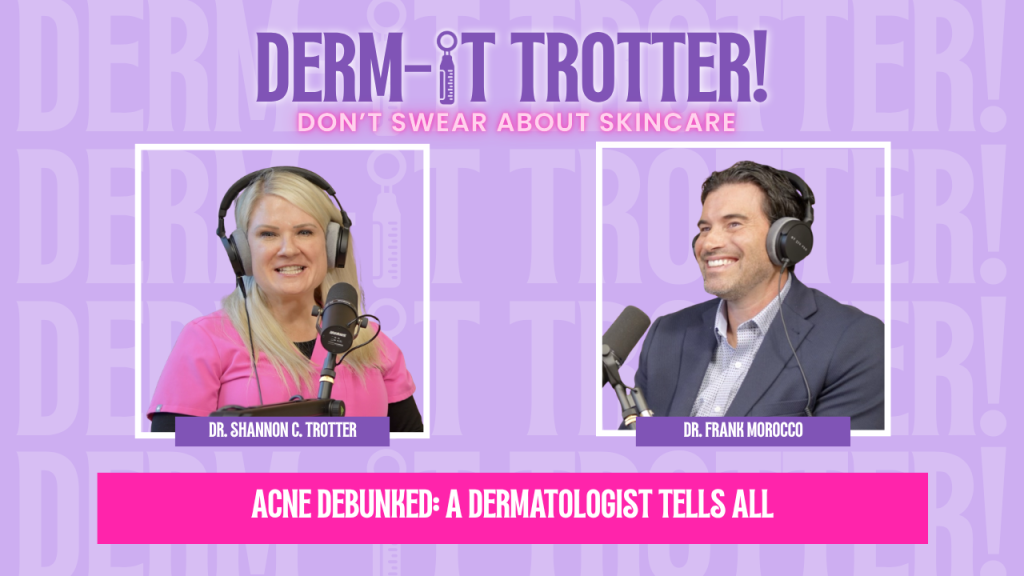
If acne has ever made you cancel plans, hide in photos, or feel like your skin is “out of control,” you are not alone, and you are not doing anything wrong. We sit down with our friend and fellow Ohio dermatologist Dr. Frank Morocco to unpack why acne can hit self-esteem so hard and what […]
Pregnancy-Safe Skincare: What’s Safe and What to Avoid

Skincare rules feel totally different when pregnancy enters the chat, and the internet does not make it easier. We sit down with Dr. Kelly Tyler, a rare double board-certified expert in OB-GYN and dermatology, to give you a clear, evidence-based guide to pregnancy safe skincare that you can actually use at the bathroom sink. One […]
Cutting Medicare, Cutting Care: Who Pays the Price
Medicare rules can feel distant until they change what happens in the exam room. Today we sit down with board-certified dermatologist and leading advocate Dr. Sandy Marchese Johnson to explain why a new CMS proposal has physicians calling it a “three-part bomb” and why patients should care right now.
We start with the uncomfortable math: Medicare physician reimbursement has effectively gone down over decades, even as inflation and practice expenses rise. Then we translate policy into real life. The proposed modifier 25 change could cut payment when we evaluate a problem and do a procedure on the same day, the exact kind of efficient, patient-friendly visit many people depend on. That can push clinics toward split appointments, more travel, more time off work, and delays for things like biopsies or treatment of multiple concerns in one visit.
We also dig into the overhead most patients never see: staffing ratios, supplies, rent, insurance, and the technology required to run a modern dermatology practice. Proposed changes to indirect expense calculations could hit in-office specialties especially hard and accelerate consolidation, shrinking access to independent private practices. Finally, we talk about who gets a voice in how medical services are valued, why clinician input matters, and what the CMS timeline looks like from public comment to potential January 1 implementation.
If you’ve ever wondered why call-backs take longer, why waitlists grow, or why clinics ask you to come back for something that used to happen the same day, this conversation connects the dots. Subscribe, share this with someone who relies on Medicare, and leave a review with your biggest question about how these rules should be written.
DISCLAIMER: The views and opinions expressed in the Derm-it Trotter! podcast are those of the host and guests and do not necessarily reflect the views or positions of the guests’ or host’s institution or employers. The Derm-it Trotter! Podcast is for general informational purposes only and does not constitute the practice of medicine, nursing or other professional health care services, including the giving of medical advice, and no doctor/patient relationship is formed. The use of information on this podcast or materials linked from this podcast is at the user’s own risk. The content of this podcast is not intended to be a substitute for professional medical advice, diagnosis, or treatment. Users should not disregard or delay in obtaining medical advice for any medical condition they may have and should seek the assistance of their health care professionals for any such conditions.
Hidradenitis Suppurativa Treatment: Understanding Biologics
Hidradenitis Suppurativa (HS) can steal your comfort, your workouts, your sleep, and sometimes your confidence, all while getting dismissed as “just boils.” We wanted a clear, practical roadmap for hidradenitis suppurativa treatment, so we brought on Dr Graham Litchman, a board-certified dermatologist and clinical trials leader, to talk through what actually helps patients now and […]
Visible Light & Skin Damage: Is it the Real Culprit?
SPF labels can feel reassuring until you do everything “right” and still end up red, tan, or blotchy. We sit down with board-certified dermatologist Dr. George Martin to unpack a missing piece in everyday sun protection: visible light and high-energy visible (HEV) light. If you’ve ever wondered what broad spectrum sunscreen truly covers, why UVA […]
Beauty, Brains and the Bronze: Why We Tan

In this episode, we talk about the psychology of tanning. I’m joined by Sherry Pogato, a licensed clinical psychologist, professor, and social media researcher at the University of Connecticut, to break down why indoor tanning and outdoor sunbathing can feel so rewarding – and why melanoma risk warnings barely register. We get into the real […]
Dermatologists: The MacGyvers of Medicine

Sooooo if you read the title and thought, “Who’s MacGyver?” then I’m sorry but you need to Google it. It may show my age, but it’s the perfect analogy for this blog. Basically, MacGyver was a famous TV show, where the main character, aka MacGyver, was the ultimate improvisor who turned ordinary tools into extraordinary […]
Derms Gone Rogue: When We Go Off-Label

“Off-label” can sound like a red flag, but in dermatology it’s often the most practical way to treat real people with real problems. Dr. Trotter sits down with board-certified dermatologist Dr. Victoria Farley to explain what FDA approval actually means, why many effective skin treatments never get a specific label, and how we talk through […]