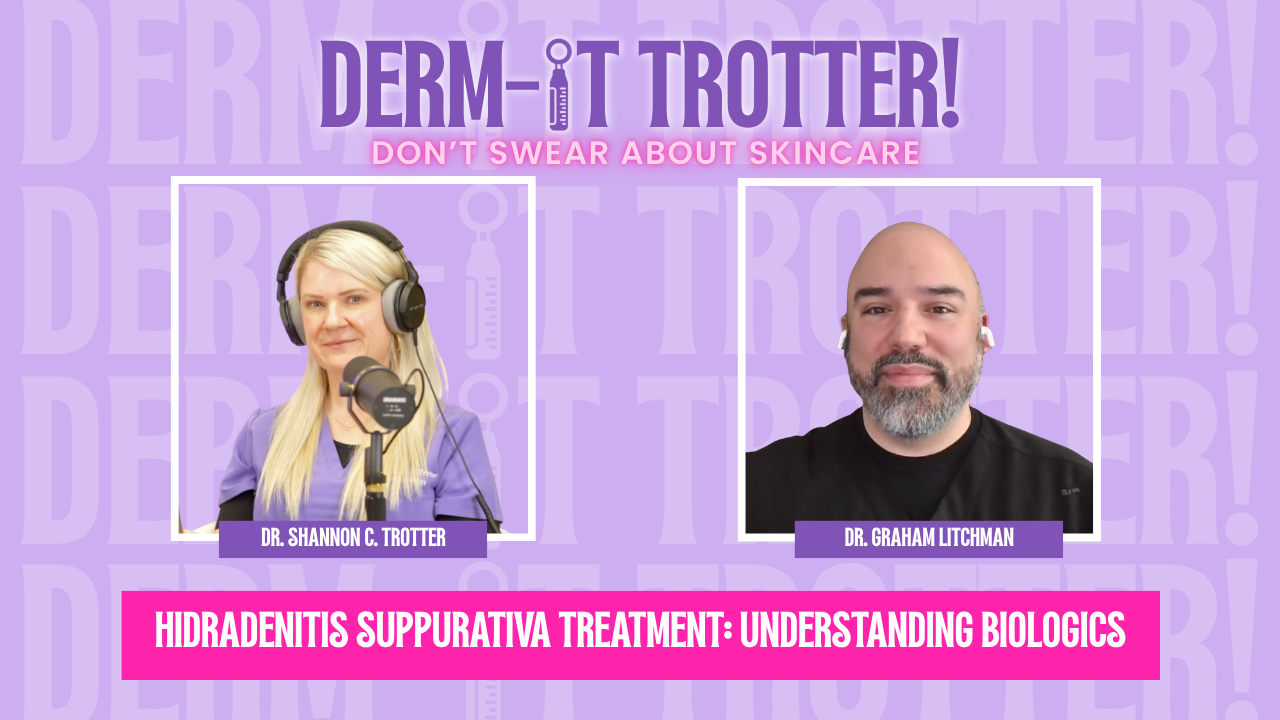
Hidradenitis Suppurativa (HS) can steal your comfort, your workouts, your sleep, and sometimes your confidence, all while getting dismissed as “just boils.” We wanted a clear, practical roadmap for hidradenitis suppurativa treatment, so we brought on Dr Graham Litchman, a board-certified dermatologist and clinical trials leader, to talk through what actually helps patients now and what’s coming next.
We start by translating the basics: what biologic medications are, why so many names end in “-mab,” and how to think about inflammation as a cascade you can block upstream or downstream. Then we get concrete about HS therapies, including the limitations of older staples like topical benzoyl peroxide, topical clindamycin, doxycycline, hormonal approaches, metformin, isotretinoin, and long-term steroids. From there, we dig into the three FDA-approved biologics for hidradenitis suppurativa, including adalimumab (Humira), secukinumab (Cosentyx), and bimekizumab (Bimzelix), plus why switching within the same drug class can still be a winning move.
We also tackle what patients worry about most: side effects, infection risk, and how we “qualify” someone for the right advanced therapeutic based on medical history like inflammatory bowel disease or malignancy. A huge theme is the HS “window of opportunity” and why early control may prevent progression, tunnels, and permanent scarring. We close with pediatric and adolescent HS considerations and a look at the future, including next-wave biologics and oral small-molecule JAK inhibitors like povorcitinib.
If you want more clarity and better questions to bring to your dermatologist, listen now, share this with someone dealing with HS, and subscribe and leave a review so more people can find real help.
DISCLAIMER: The views and opinions expressed in the Derm-it Trotter! podcast are those of the host and guests and do not necessarily reflect the views or positions of the guests’ or host’s institution or employers. The Derm-it Trotter! Podcast is for general informational purposes only and does not constitute the practice of medicine, nursing or other professional health care services, including the giving of medical advice, and no doctor/patient relationship is formed. The use of information on this podcast or materials linked from this podcast is at the user’s own risk. The content of this podcast is not intended to be a substitute for professional medical advice, diagnosis, or treatment. Users should not disregard or delay in obtaining medical advice for any medical condition they may have and should seek the assistance of their health care professionals for any such conditions.