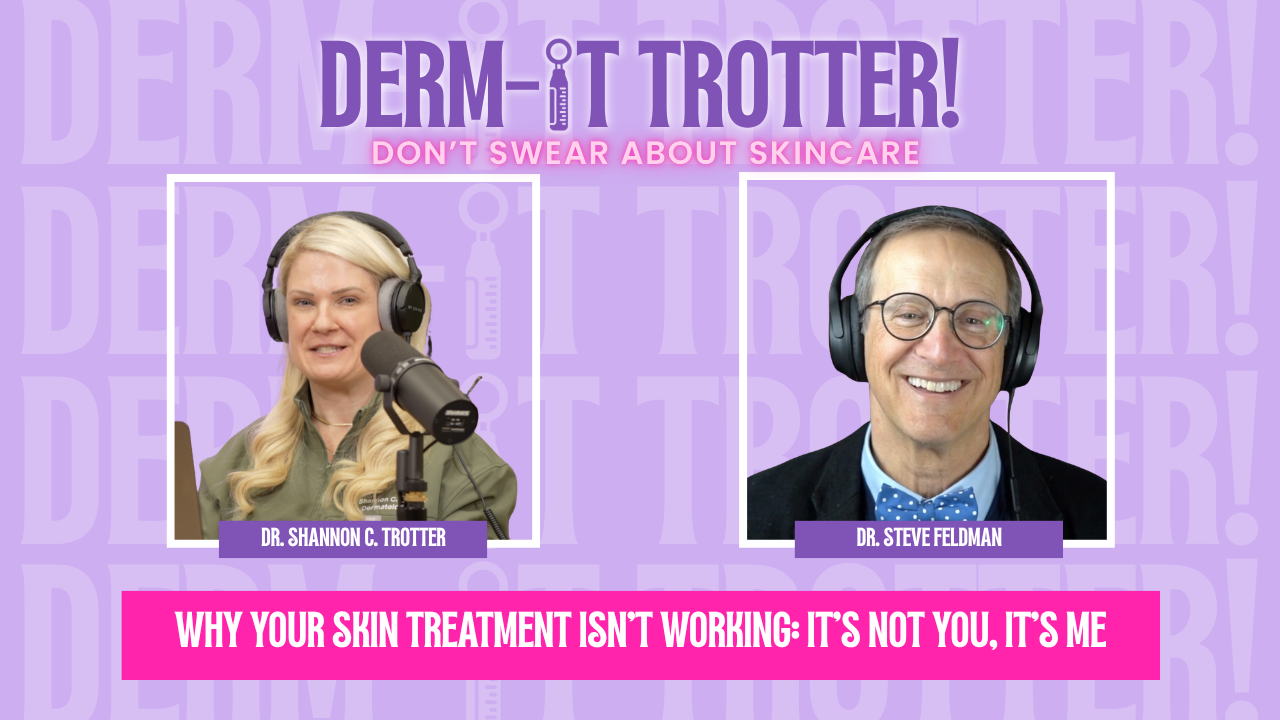
Most skincare and dermatology treatments don’t fail because the medicine is weak. They fail because real life is messy, routines are hard, and “use this twice a day” turns into “I’ll start tomorrow.” We sit down with returning guest Dr. Steve Feldman, a board-certified dermatologist and dermatopathologist who researches medication adherence, to unpack what actually happens between the prescription and the bathroom counter.
We talk candidly about why topical treatments for psoriasis and eczema are uniquely challenging, how objective tracking (like smart bottle caps) changed what we thought we knew, and why the mindset shift matters: don’t blame the patient, redesign the system. Dr. Feldman shares behavior-based tactics you can use immediately, including environmental cues, written instructions, simpler dosing, and why frequent follow-up works like piano lessons. If you’ve ever felt guilty about not using a cream exactly as directed, this conversation replaces shame with strategy.
A highlight is the “three-day sprint” approach for scalp psoriasis using clobetasol, built around short timelines, realistic coaching, and accountability that mirrors why people floss right before the dentist. We also explore the future of patient engagement with AI in healthcare, including automated check-ins that may feel surprisingly supportive, plus persuasion tools like anchoring and the outsized power of a single story.
If you care about better outcomes in dermatology, skincare routines, and patient-centered care, hit play, then subscribe, share this with a friend who’s struggling with a regimen, and leave a review with your biggest adherence challenge.
DISCLAIMER: The views and opinions expressed in the Derm-it Trotter! podcast are those of the host and guests and do not necessarily reflect the views or positions of the guests’ or host’s institution or employers. The Derm-it Trotter! Podcast is for general informational purposes only and does not constitute the practice of medicine, nursing or other professional health care services, including the giving of medical advice, and no doctor/patient relationship is formed. The use of information on this podcast or materials linked from this podcast is at the user’s own risk. The content of this podcast is not intended to be a substitute for professional medical advice, diagnosis, or treatment. Users should not disregard or delay in obtaining medical advice for any medical condition they may have and should seek the assistance of their health care professionals for any such conditions.