Coming in second doesn’t appeal to most people. We tend to remember who came in first and who came in last. Or who just did a bad job or gave an amazing performance. That’s probably why the second most common type of skin cancer, known as cutaneous squamous cell carcinoma (cSCC), doesn’t resonate with the public. A 2019 survey revealed that only 3% of people can correctly identify cSCC as one of the top three most common cancers. See, who remembers second place?
But second doesn’t mean any less important or that cSCC numbers are insignificant. In the US, it’s estimated that around 1.8 million cases of cSCC are diagnosed each year or around 205 cases every hour. On average, I can biopsy 5-15 in a day, sometimes more, and even multiple on the same patient in one visit. The dilemma is that we don’t really know true cSCC numbers because there isn’t a requirement to report them. So many of us think the estimates offered are inaccurate and grossly underestimate actual cases. In addition, because early cSCC can mimic precancerous lesions, known as actinic keratoses, it’s possible and likely that some early cSCCs are treated with topical creams or liquid nitrogen without ever being biopsied.
One of the challenges with cSCC is a lack of public awareness. The same survey showed approximately 42% of Americans have never heard of cSCC before while only 11% said that they have never heard of melanoma. Melanoma often steals the spotlight, which makes sense based on its aggressive nature and focused attention on its potential to metastasize and cause death. The term squamous cell carcinoma (SCC) can also throw people off because there are other squamous cell cancers that arise in the body, like the throat or lung. The addition of cutaneous is helpful, as it distinguishes cSCC from other cancers that arise from squamous cells and emphasizes that it is a skin cancer.
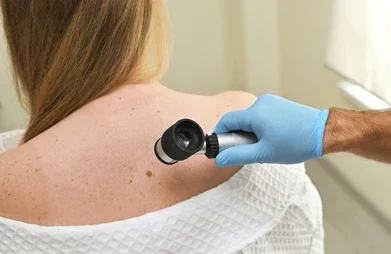
If you’re wondering what to look for with cSCC, think about pink bumps, nonhealing wounds or warty growths, especially on sun-exposed sites. cSCC also likes to present on the lip and genitals. Yep. You can get skin cancer even where the sun hasn’t shined. Most cSCC are linked to chronic ultraviolet light exposure but cSCC can also develop in skin affected by trauma, burns and chronic inflammation. The human papilloma virus (HPV) is also associated with cSCC. While basal cell carcinoma (BCC) is the most common cancer in fair skinned individuals, cSCC is the most common cancer in darker skin types and transplant patients.
Perhaps the greatest misperception that cSCC doesn’t spread or cause death. About 72% of Americans do not understand that nonmelanoma skin cancers like cSCC can metastasize and become deadly if not treated early. While it’s true that a vast majority of cSCC can be successfully treated with surgery alone, the thought that cSCC is just harmless is flat out misleading. Surgery can also come with drawbacks such as cost, disfigurement, incomplete removal or impaired function after the fact. Moreover, some patients may not be good surgical candidates. Luckily, we have tools available to identify high risk cSCC, like with gene expression profiling. Moreover, for advanced cSCC, we also have therapeutics designed to capitalize on the immune system to take cSCC down.
What may shock you is this—On an annual basis, cSCC causes more deaths than melanoma. Surprising, right? In the US, it’s estimated that almost twice as many people, around 15,000, will die from cSCC in the US than from melanoma. But no one really talks about it. Well, I’m here to start the conversation.
Trotter’s Take: cSCC should be respected as a skin cancer that requires due diligence with prevention, diagnosis and management.
Get to know cutaneous SCC with Dr. Carlos Gomez-Meade as we provide more insight into a second place skin cancer that deserves first place recognition.