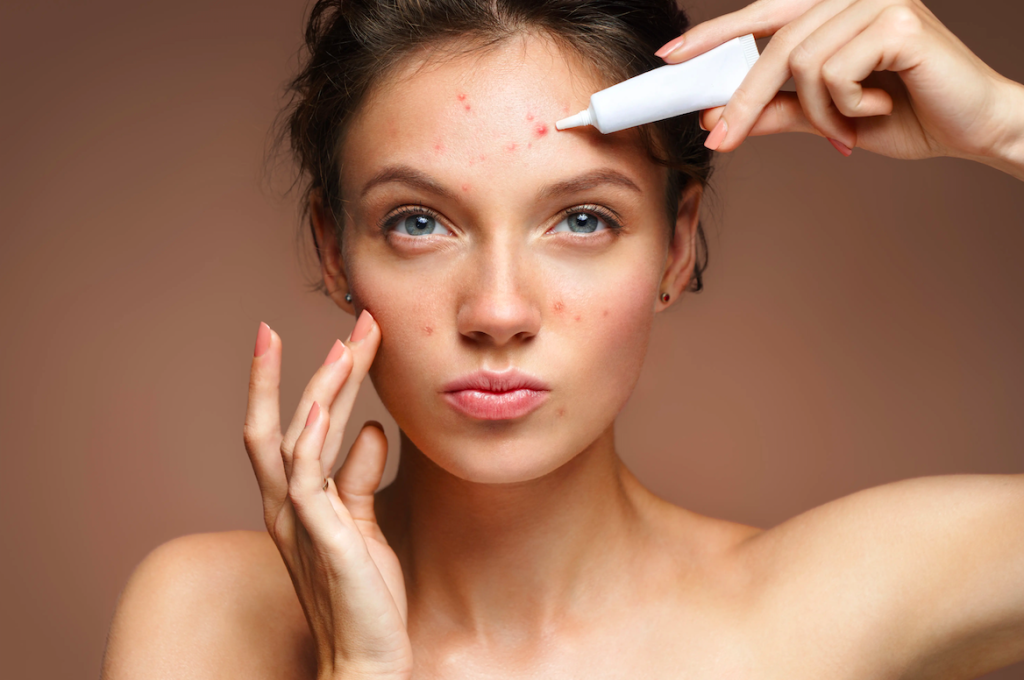
Yes, it’s true. No matter how good your skin looks, we’ve all had one—a juicy pimple. Some of us are lucky and rarely experience a breakout—the dermatologic unicorns, and for others, it can be a lifelong battle. I can remember breaking out for the first time in fourth grade. Then there’s another category of acne sufferers—the ones that never had a pimple as a teenager and their acne is now a feature of their adulthood. Acne unites us all in some way, shape or form.
And the funny part? We’ve all fallen victim to the old wives’ tales of how to handle an acne lesion. From toothpaste to lemon juice to picking a lesion to death, the hacks to make acne go away are endless. The reality is, if it sounds too good to be true, it often is. But that won’t stop the onslaught of options and creative “solutions” out there especially on social media. And when you’re in a bind or have a big event the next day, you’re tempted to try even the craziest fix in hopes it will shrink that zit down. Yes, I’ve been there too.
The acne myth that drives me the craziest is tanning improves acne. Ultraviolet light (UV), a carcinogen remember, may reduce the redness you see with acne, but it is not a treatment. UV light can dry out acne lesions and temporarily hide redness by camouflaging them with a surrounding tan, but it does not treat your acne. In fact, UV light irritates the skin, damages your skin barrier, and raises your risk of skin cancer. There are several effective treatments for acne, which don’t increase your risk for skin cancer, so this should be a no-brainer, but it’s a myth many people still subscribe to.
Another favorite of mine is thinking that acne only affects teenagers. Many women, and men for that matter, will struggle with acne into adulthood or the first time they even encounter a pimple is when they are well beyond the teenage years. While it’s true that the hormonal fluctuations seen in adolescence are a major trigger for acne, that can often transcend the teenage years for some. Stress can also affect hormones and contribute to acne in adulthood.
Got oily skin? My husband’s skin has more oil than the Middle East and it took an act of God to finally get him to accept that his skin still needed moisture. Well, more like an act of a dermatologist wife that promised him free samples. Many acne patients mistakenly think that if they have oily skin then they don’t need moisturizer. This is false. Oil production does not equate to adequate skin hydration. Even oily skin needs moisture. The challenge is finding the right moisturizer that doesn’t feel too heavy or greasy while still providing the skin with hydration. Often gel or whipped moisturizers are a good fit so that oily skin folks don’t feel like their moisturizer is too heavy or making them even greasier. And if you’re acne prone, choose a noncomedogenic (won’t clog pores) option.
And finally, the fan favorite that eating pizza or chocolate will cause you to break out. Well, maybe. Foods that have a high glycemic index, like sugary, processed foods, can cause your blood sugars to spike and trigger IGF-1 (insulin-like growth factor) to rise which ramps up androgen production. Androgens stimulate oil glands and you guessed it, the acne cascade starts. Some people notice a distinct flare in their acne with high glycemic foods like white bread, pasta, sugary drinks, etc. while others don’t notice the same impact. Bottom line, if you notice a trend, then cut back on your simple carbs and sweet treats. And even if you don’t flare, a low glycemic diet has other health benefits you can take advantage of too.
Trotter’s Take: Acne unites us in the human experience but don’t believe everything you see. Seek out a dermatologist for advice and the sooner, the better.
Want to bust acne myths and learn to speak the acne truth? Then hit play on my podcast with Dr. Frank Morroco as he sets the record straight on acne.