The AI Revolution: From Wendy’s to Your Skin Cancer Diagnosis
Recently, you may have heard about the University commencement speeches and several speakers mentioning artificial intelligence (AI) in their address. The booing graduates in the audience might have surprised you but it brought a smile to my face. In a world where technology has created an instant, at your fingertip’s generation, it’s refreshing and uplifting that the class of 2026 doesn’t think AI is the answer to everything. They recognize the threat it poses to job security and work originality. Just don’t ask AI if it agrees!
AI is a term that is thrown around and paired with it you might see augmented intelligence or augmented artificial intelligence. It’s important to understand the distinction between the two and their relationship. AI, or artificial intelligence, was coined by John McCarthy, aka the Father of AI, in 1956. AI runs independently and minimizes or eliminates human effort or involvement—yes to replace human workers. A good example might be the AI that has now entered the drive-thrus of most fast-food restaurants. Now going to Wendy’s seems like a futuristic experience but the reality is, that’s AI in everyday life. In contrast, augmented intelligence relies on technology to provide suggestions and then it’s human decision making that collectively decides on next steps. Augmented intelligence keeps the people aspect, which is essential for industries like healthcare and finance where context is central to what we do.
Now AI might turn you off, but the reality is we use it every day. Siri’s ability to recognize your voice or just performing a Google search yields an AI result at the top. ChatGPT has become a resource for me with presentation planning and social media content. Initially, I struggled to use my ChatGPT app because it felt dishonest to use technology for creative help. To this day, it still feels a little disingenuous. When I wrote a parody of a Britny Spears’ song (yes, a plus here insert YouTube link), I was aghast and offended when someone asked me if AI wrote it for me. Putting my pride aside, I’ve decided to let it go and look to AI as a tool to maximize my efficiency in a fast-paced busy world. I am an efficiency connoisseur so if AI can give me more time with my family and I can find a way to maintain my authenticity, then it’s a perfect match. And if you’re wondering…No, I don’t have AI write my blogs.
Like many health care providers, patients seem to share the sentiment and have expressed various opinions over AI in medicine. A study published in Nature in 2024 compared two groups—one was told that the advice came from a human physician while the other group thought it came from an AI-supported chatbot. Those in the AI-generated group were less likely to describe the information as reliable and also less willing to follow the advice. A Yale survey in 2022, showed fears surrounding AI include misdiagnoses, privacy concerns, less time with their doctor and increased costs. What’s more is that these concerns were highest in ethnic and racial minority groups.
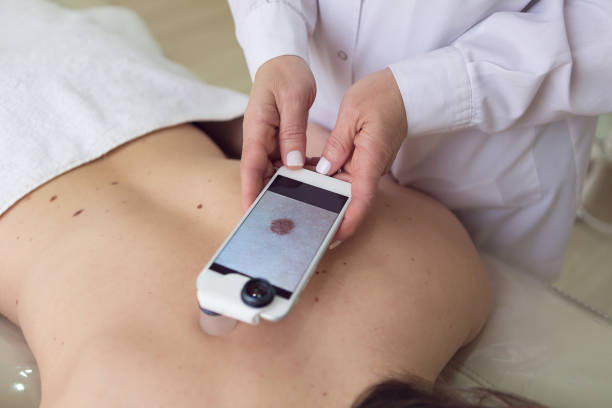
One of the biggest areas of medicine that many agree AI can help with is the administrative burden of healthcare like documentation and scheduling. AI has also become common practice with office tasks like prior authorizations requests, on both sides of the fence. Providers often utilize AI platforms to get medications approved for patients efficiently while insurers are using AI software to not approve claims. In dermatology, skin cancer detection has become front and center for AI. The question is, can AI help detect skin cancer earlier, faster and more accurately? With access challenges to dermatologists, AI for skin cancer detection offers many advantages including triaging patients and prioritizing urgent lesions. This can be especially helpful in rural or underserved communities and could be integrated into teledermatology services. Even now, there are two FDA cleared AI powered devices for skin cancer detection available.
However, there are still several unanswered questions, like how should clinical trials be designed to evaluate these devices, what would clinic workflows look like, what about reimbursement for AI services and weighing on everyone’s mind–who is responsible if AI misses a melanoma? While laws can vary state to state, the physician or provider is responsible. The law reminds us that AI is not a health care provider which is ironically reassuring of our essential role in medicine. We are ultimately responsible for a patient’s care and no ChatBot can take that from us.
Trotter’s Take: Augmented AI will continue to expand within healthcare, but clinical context and human connection are at the foundation of what we do.
Is AI technology for skin cancer detection better than the dermatologist? Get to know where AI is for skin cancer today and where we might be tomorrow with Dr. Laura Ferris.